
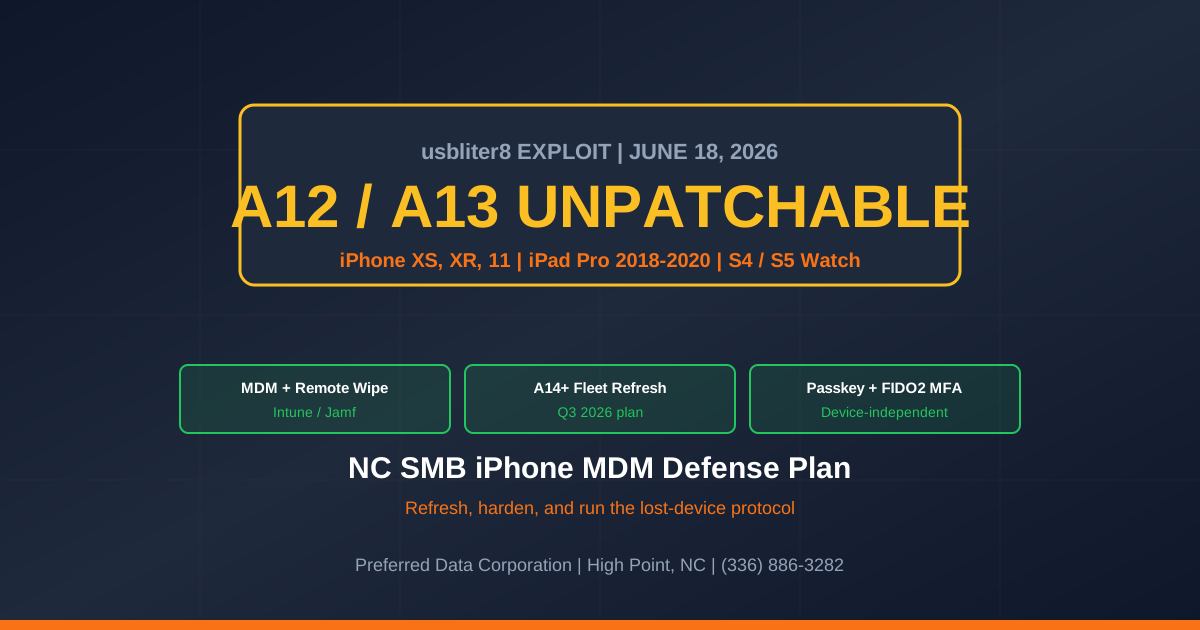
TL;DR: On June 18, 2026, security researchers at Paradigm Shift published a working exploit named usbliter8 that achieves arbitrary code execution inside the SecureROM of Apple's A12 and A13 chips - the silicon inside iPhone XS, XS Max, XR, and the entire iPhone 11 line, plus Apple Watch S4 / S5 and some iPads, per The Hacker News. The vulnerability is burned into silicon and cannot be patched. The attack requires physical possession plus a USB connection in DFU mode and completes in under two seconds, per AppleInsider. NC SMBs running corporate or BYOD iPhones from the 2018-2019 lineup need a refresh plan, an MDM policy, and a lost-device protocol now.
Key takeaway: usbliter8 is the modern checkm8 - an unpatchable boot-chain bypass that turns a stolen or "lost" iPhone XS / XR / 11 into a forensic open-book. The fix is not a patch (there isn't one); the fix is fleet refresh, MDM-enforced disk encryption + remote wipe, phishing-resistant MFA that does not rely on the device, and an incident protocol that closes the window between "device missing" and "data exposure."
Need an iPhone fleet refresh and MDM plan before Q3 2026? Preferred Data Corporation runs managed IT and mobile device programs for NC small businesses since 1987. Call (336) 886-3282 or book a mobile device review.
What is usbliter8 and which Apple devices are affected?
usbliter8 is a published proof-of-concept that bypasses the SecureROM boot chain on Apple's A12 and A13 chips, per The Hacker News. The technique is a USB DMA buffer-underflow that runs before iOS's signed boot chain loads - which means the protections layered on top of the boot chain (Secure Enclave attestation, signed iOS, FileVault-style class keys) cannot defend against the exploit at the SecureROM level.
Apple devices affected, per 9to5Mac and MacRumors:
| Apple Chip | Devices | Released | NC SMB Reality |
|---|---|---|---|
| A12 | iPhone XS, XS Max, XR | 2018 | Common in BYOD pools 2026 |
| A12X / A12Z | iPad Pro 2018, iPad Pro 2020 | 2018-2020 | Used in field services + plant floor |
| A13 | iPhone 11, 11 Pro, 11 Pro Max, SE (2nd gen) | 2019-2020 | Still in active corporate fleets |
| S4 | Apple Watch Series 4 | 2018 | Frontline / industrial wearables |
| S5 | Apple Watch Series 5, SE | 2019-2020 | Same |
The A12 / A13 ages perfectly into the typical NC SMB three-to-five-year refresh cycle. An iPhone XS bought corporate in 2018 is now seven years old and still in the BYOD pool because "it still works." An iPhone 11 issued to a service technician in 2020 is now five years old and inside the fleet. Both are now permanently outside Apple's patch authority for this class of attack.
Quotable definition: An unpatchable hardware vulnerability is one Apple cannot fix with iOS updates because the flawed code is burned into silicon at manufacture. The defense is not a software patch - it is fleet refresh, MDM-enforced compensating controls, and an incident protocol that assumes physical access equals data exposure.
Three facts an NC SMB owner should write down:
- The attack requires physical possession of the device in DFU mode plus a USB cable to a specific microcontroller board. Per The Hacker News, the proof-of-concept uses an RP2350-based board and completes in under two seconds. This is not a remote exploit; it is a lost-device / stolen-device exploit.
- Once the attacker bypasses SecureROM, the iOS signed-boot chain protections fall. This enables attacker-controlled boot and forensic data extraction. The class is similar to checkm8 (2019), the SecureROM exploit that left A5 - A11 devices permanently outside Apple's patch authority for boot-chain attacks.
- The fix is not a patch. Per AppleInsider, no software update can reach the silicon. Affected devices carry the vulnerability for the rest of their service life.
Why does this matter to NC SMBs running iPhone fleets in 2026?
Because the A12 / A13 iPhone fleet is exactly the band of devices NC SMBs still have in active rotation. NC manufacturers issue iPhone 11s to service technicians for jobsite documentation. NC distributors deploy iPad Pros to warehouse and shipping floors for label printing and inventory tracking. NC professional services firms keep iPhone XSes in BYOD pools because the operator likes the form factor and "it still gets iOS updates." None of those iOS updates close the SecureROM hole.
The realistic threat model is not nation-state actors targeting specific NC SMBs. It is:
- Lost or stolen device on a jobsite, in a parking lot, in a hotel room. A technician's iPhone 11 left in a truck overnight is the modal exposure event. Once the device is in attacker hands plus an RP2350 board, the SecureROM bypass runs in under two seconds.
- Repair shop / refurb chain handling. A device handed to an unvetted repair vendor or sold to a refurb broker is a chain-of-custody event that NC SMBs typically do not track post-decommission. The same SecureROM bypass applies to a "wiped" device in the refurb chain.
- Disgruntled employee at offboarding. A BYOD device retained by a departing employee, with corporate email, OneDrive cache, Teams chat history, and saved credentials is the same exposure event with a longer dwell time.
Per the verizon-dbir-2026-third-party-breaches-48-percent-vendor-risk-smb-north-carolina data, physical device exposure is no longer the rare path it was a decade ago - lost / stolen device incidents now factor into multiple SMB breach categories.
What should an NC SMB do this month about A12 / A13 Apple devices?
Run a five-step plan inside 30 days. The exploit is public, the tooling is documented, and the typical NC SMB has more A12 / A13 devices in the fleet than the IT inventory shows.
- Inventory A12 / A13 devices (this week). Pull the device list from MDM (Intune, Jamf, Kandji) and from the Microsoft Entra ID / Google Workspace device join records. Filter to iPhone XS / XS Max / XR / 11 / 11 Pro / 11 Pro Max / SE 2 and iPad Pro 2018 / 2020. Identify the owner, the device class (corporate / BYOD), the data class (PII / financial / regulated), and the renewal eligibility date.
- Enforce MDM compensating controls on every remaining device (this week). Mandatory device passcode (6+ digit, not biometric-only), MDM-enforced disk encryption, MDM remote-wipe enrolled, lost-mode policy configured, and conditional access policies that refuse risky devices from sensitive workloads.
- Plan the refresh (this month). Schedule retirement of A12 / A13 devices that hold sensitive data or are issued corporate. iPhone 12 (A14) and newer use Apple Silicon with the W1 security boundary and current SecureROM that is not affected. Trade-in programs subsidize part of the refresh.
- Update the BYOD policy and offboarding protocol (this month). Require corporate data containers (Intune App Protection Policies / Microsoft Mobile Application Management) so corporate data lives in a wipeable container regardless of device ownership. Update offboarding to revoke conditional access on Day 0, not Day 14.
- Tighten the lost-device protocol (this month). Document the SMB-side response: who triggers remote wipe, who notifies counsel, who rotates affected service-account credentials, who reviews logs for post-loss anomalous activity. The window between "device missing" and "wipe executed" is the exposure window.
Key takeaway: The usbliter8 exploit does not require an SMB to disable iPhone fleets overnight. It requires the SMB to treat the A12 / A13 cohort as compromised-when-lost and plan the refresh + MDM hardening + lost-device protocol as a Q3 2026 priority.
How does Preferred Data Corporation help NC SMBs harden mobile fleets?
PDC runs managed IT for NC SMBs with mobile device management, BYOD policy design, and incident response since 1987. We bring three things to the June 2026 usbliter8 disclosure:
- Managed IT services: MDM deployment (Intune, Jamf, Kandji), conditional access policies through Microsoft Entra ID, fleet refresh planning, trade-in vendor coordination, and lost-device runbooks.
- Managed cybersecurity services: BYOD policy design, Mobile Application Management for corporate-data-in-personal-device, phishing-resistant MFA (passkeys / FIDO2) to remove device-bound TOTP dependency, and Incident Response Plan tabletops that include lost / stolen device scenarios.
- Backup and data protection services: Data classification mapped to device class, encryption at rest validation, OneDrive / SharePoint sync controls for mobile devices, and offboarding runbooks that include same-day conditional access revocation.
For NC manufacturers in High Point and the Piedmont Triad issuing service iPhones to technicians, NC distributors in Greensboro with warehouse iPad fleets, NC professional services firms in Charlotte with BYOD pools, and NC healthcare practices managing PHI on mobile devices - the A12 / A13 cohort is now a planning problem with a Q3 2026 deadline.
Need help running a mobile fleet inventory and refresh plan? Call (336) 886-3282 or book a mobile device review.
Frequently Asked Questions
What does usbliter8 do?
usbliter8 is a working proof-of-concept exploit, published June 18, 2026 by Paradigm Shift, that achieves arbitrary code execution inside the SecureROM of Apple's A12 and A13 chips. Per The Hacker News, the attack uses a USB DMA buffer-underflow before iOS's signed boot chain loads, and completes in under two seconds with physical device access in DFU mode plus an RP2350-based microcontroller board.
Which Apple devices are affected by usbliter8?
The public proof-of-concept supports the A12, A13, S4, and S5 chips. That covers iPhone XS, XS Max, XR, iPhone 11, 11 Pro, 11 Pro Max, iPhone SE (2nd gen), iPad Pro (2018 and 2020), and Apple Watch Series 4 / 5 / SE, per 9to5Mac. A12X and A12Z support is described as theoretically possible. iPhone 12 (A14) and newer are not affected.
Can Apple patch usbliter8?
No. Per AppleInsider, the vulnerable code lives in SecureROM, which is burned into the silicon at manufacture. No iOS or watchOS update can reach it. Affected devices carry the vulnerability for the rest of their service life. The defense is fleet refresh, MDM-enforced compensating controls, and an incident protocol that assumes physical access equals data exposure.
Is usbliter8 a remote attack?
No. The exploit requires physical possession of the device in DFU mode plus a USB connection to a specific microcontroller board. The realistic threat is a lost or stolen device, a device handed to an unvetted repair vendor, or a device retained by a departing employee - not a remote network attack. The SMB-side mitigation centers on MDM remote wipe, conditional access policies, and chain-of-custody for decommissioned devices.
What should an NC SMB do about iPhone XS / 11 in BYOD pools?
Three steps: (1) Apply MDM App Protection Policies / Mobile Application Management so corporate data lives in a wipeable container regardless of device ownership. (2) Enforce phishing-resistant MFA (passkeys / FIDO2) so authentication does not depend on the device. (3) Plan a managed retirement of A12 / A13 devices that hold sensitive corporate data, with trade-in programs offsetting cost. Do not allow A12 / A13 BYOD devices into CMMC / HIPAA / PCI-scope workloads.
How does this compare to checkm8 in 2019?
checkm8 was the 2019 SecureROM exploit that permanently put A5 - A11 devices outside Apple's patch authority for boot-chain attacks. usbliter8 extends the same class of attack to A12 - A13 (and S4 - S5), per MacRumors. The defensive playbook is similar: assume the device cohort is compromised-when-lost, refresh the fleet, harden MDM, and tighten the lost-device protocol.
Related Resources
- Managed IT Services for NC Businesses - Mobile device management
- Managed Cybersecurity Services - BYOD policy and incident response
- Backup and Data Protection Services - Mobile data classification
- YellowKey BitLocker CVE-2026-50507: NC SMB Laptop Defense - Companion physical-access-class defense
- Apple Siri-Gemini WWDC 2026: NC SMB MDM Governance - Companion MDM governance
- Contact Preferred Data Corporation - Mobile device review for NC SMBs