
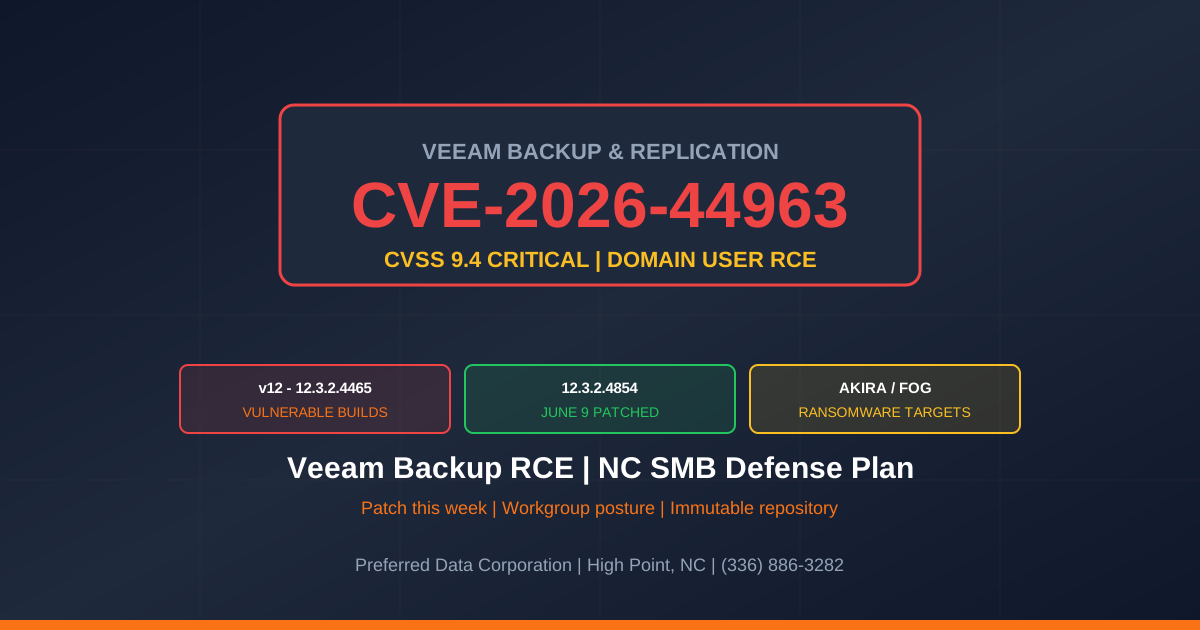
TL;DR: On June 9, 2026, Veeam disclosed CVE-2026-44963, a critical Remote Code Execution vulnerability in Veeam Backup & Replication with a CVSS v4 score of 9.4. Any authenticated domain user, not just a backup admin, can execute code on a domain-joined Veeam Backup Server. The fix is version 12.3.2.4854. Prior Veeam bugs like CVE-2024-40711 were weaponized by Akira and Fog ransomware crews within weeks, so NC small businesses running domain-joined Veeam backups need to patch this week, audit who can authenticate, and verify their immutable / air-gapped tier still exists.
Key takeaway: A backup-server RCE is the single most valuable foothold a ransomware crew can land. If your Veeam Backup Server is domain-joined and unpatched, every protected restore point in the production domain is in scope for the same intruder that hits a single workstation. The June 2026 patch closes the door; getting the backup server off the domain closes the room.
Need your Veeam backup posture patched and isolated this week? Preferred Data Corporation runs managed backup and recovery for NC small businesses since 1987. Call (336) 886-3282 or request a backup posture review.
What is CVE-2026-44963 and why does it matter for an NC small business?
CVE-2026-44963 is an authenticated Remote Code Execution vulnerability in Veeam Backup & Replication versions 12 through 12.3.2.4465. Per Veeam's June 9, 2026 advisory and The Hacker News' coverage, any authenticated domain user can trigger code execution on the Backup Server. That is the single most dangerous shape of a backup vulnerability: a low-privilege ticket on any domain account becomes full control of every protected workload, every restore point, and every off-host copy.
Three facts an NC SMB owner should write down:
- CVSS 9.4 Critical. Per Cybersecurity News and BleepingComputer, the vulnerability scores 9.4 on CVSS v4, with low attack complexity, network attack vector, and no user interaction required beyond initial authentication.
- Domain-joined Veeam servers are the entire population at risk. Per Veeam KB4696, backup servers running in a workgroup configuration are not affected. The remediation is patch + workgroup posture, not patch alone.
- History repeats fast. Per Cybersecurity News, Akira and Fog ransomware crews weaponized the prior Veeam RCE (CVE-2024-40711) inside weeks of public disclosure. Sina Kheirkhah of WatchTowr, who reported CVE-2026-44963, also reported the 2024 bug.
For an NC manufacturer in High Point, a distributor in Greensboro, or a professional services firm in Charlotte, the practical question is: "If a phishing landing lands a domain-user account today, can the same attacker pivot to our Veeam server and delete restore points before we notice?" If the backup server is domain-joined and unpatched, the answer is yes.
What versions of Veeam Backup & Replication are vulnerable?
Veeam Backup & Replication versions 12 through 12.3.2.4465 (and all earlier 12.x builds) are vulnerable. The fix is in Veeam Backup & Replication 12.3.2.4854, released June 9, 2026. Per TechJack Solutions' CVE-2026-44963 analysis, the 13.x release line is not affected because of architectural changes Veeam shipped in the v13 build.
| Veeam Backup & Replication Version | Status |
|---|---|
| 12.0 through 12.3.2.4465 (any 12.x build) | Vulnerable - patch immediately |
| 12.3.2.4854 (June 9, 2026 release) | Fixed - target build for v12 fleet |
| 13.x release line | Not affected |
NC SMBs running Veeam Cloud Connect, Veeam Backup for Microsoft 365, or Veeam ONE on the same Backup Server host should patch the Backup Server first, then validate that the companion roles re-register with the patched build.
Why is a domain-joined Veeam Backup Server so dangerous?
Because a domain-joined Veeam server inherits the attack surface of the entire Active Directory domain. Per The Hacker News, the practical effect of CVE-2026-44963 is that any compromised domain user account (think: phishing victim, credential-stuffed RDP user, vendor with a forgotten test account) can pivot to the backup server. The backup server stores the credentials and tokens that read and write every protected workload, so the same intruder gets:
- Read access to every protected restore point (data exfiltration source).
- Write/delete access to non-immutable restore points (ransomware leverage).
- Stored credentials for production VM, file, and SaaS workloads (lateral movement).
Quotable definition: A domain-joined backup server is a key ring on the inside of the same door it is supposed to protect. Per Veeam's own June 2026 guidance, the long-term hardening posture for the Backup Server is workgroup (not domain-joined), with a dedicated management workstation pattern for admin access.
For NC manufacturers running CMMC-aligned environments or HIPAA-covered professional services firms in the Piedmont Triad, this matters double: the backup server is part of the CUI / PHI scope, and an unpatched domain-joined Veeam server breaks the segmentation argument auditors expect to see.
What should an NC small business do this week to close CVE-2026-44963?
Run a four-step plan inside the next 7 days. June 2026 is a backup-resilience event, not a single-server patch.
- Patch the Veeam Backup Server to 12.3.2.4854 (today). Per Veeam KB4696, the patch is the only complete fix. Take a managed-host snapshot first, install the upgrade, and verify Backup Server services restart cleanly.
- Audit domain-user authentication paths to the backup server (this week). Restrict logon to a small named group of backup admins via Group Policy "Allow log on locally" and "Deny log on through Remote Desktop Services." Remove every legacy service account that does not need Veeam access.
- Verify your immutable / air-gapped tier is still intact (this week). Veeam Hardened Repository (immutable Linux XFS), object-lock-protected S3 / Wasabi / Azure Blob, and offline tape are the tiers a ransomware crew with backup-server access cannot delete. If you do not have one of these, you do not have a recoverable backup.
- Move the Backup Server to workgroup posture (this month). Per Veeam's hardening guidance, the long-term fix for "any-domain-user-can-RCE" is to take the backup server out of the production domain. Use a dedicated admin workstation pattern instead.
Key takeaway: Patching closes CVE-2026-44963. Workgroup posture + immutable tier + audited admin access closes the next one before Veeam discloses it. NC SMBs that survive the next ransomware wave will be the ones who treated June 2026 as the start of backup re-architecture, not the end.
How does Preferred Data Corporation help NC SMBs close Veeam CVE-2026-44963?
PDC runs managed backup, recovery, and ransomware defense for NC small businesses with patch SLAs, immutable repositories, and 24/7 monitoring. We bring three things to the June 9, 2026 disclosure:
- Managed cybersecurity services: KEV-rate patching for backup infrastructure, EDR on backup server hosts, identity hardening so a phished domain user cannot reach Veeam in the first place, and managed Microsoft Defender for Business deployment.
- Managed IT services: Veeam patch deployment to 12.3.2.4854, workgroup re-architecture of Backup Servers, hardened repository design with immutable XFS, and quarterly recovery drills that prove the immutable tier actually restores.
- Network and infrastructure: Network segmentation between production and backup tiers, firewall rules that deny non-backup admin RDP to the Veeam host, and management-network isolation for the Backup Server admin workstation.
For NC manufacturers in High Point and the Piedmont Triad, NC distributors in Greensboro and Winston-Salem, and NC professional services firms in Charlotte and Raleigh, the Veeam June 9 advisory is a free preview of what an Akira or Fog incident response looks like in 30 days. The work this month decides whether the next ransomware crew finds a clean restore point or a deleted one.
Need help patching Veeam to 12.3.2.4854 and isolating the Backup Server this week? Call (336) 886-3282 or book a backup posture review.
Frequently Asked Questions
What is CVE-2026-44963 in Veeam Backup & Replication?
CVE-2026-44963 is a critical Remote Code Execution vulnerability disclosed by Veeam on June 9, 2026 affecting Veeam Backup & Replication versions 12 through 12.3.2.4465. Per Veeam KB4696 and The Hacker News, any authenticated domain user (not just a backup administrator) can trigger code execution on the Backup Server. The CVSS v4 score is 9.4.
How does an NC SMB patch CVE-2026-44963?
Upgrade Veeam Backup & Replication to version 12.3.2.4854 or later. Per Veeam KB4696, this is the only complete fix. NC SMBs should take a managed-host snapshot of the Backup Server, run the upgrade, verify services restart, and confirm protected job schedules resume cleanly inside the same maintenance window.
Is a workgroup-deployed Veeam Backup Server vulnerable?
No. Per Veeam KB4696, the vulnerability requires an authenticated domain user, so Backup Servers running in a workgroup configuration are not affected by CVE-2026-44963. NC SMBs running domain-joined Veeam should plan a workgroup re-architecture as part of the long-term hardening response, not only the immediate patch.
Why is CVE-2026-44963 so dangerous for NC SMBs?
Because the backup server holds the credentials, tokens, and restore points for the entire protected environment. Per The Hacker News' coverage, a phishing-compromised domain user account is enough to RCE the Veeam server. Once on the backup server, an attacker can exfiltrate data from restore points and delete non-immutable backups before encryption begins, eliminating the recovery option ransomware victims depend on.
What is the connection between CVE-2026-44963 and Akira / Fog ransomware?
Per Cybersecurity News, the prior Veeam Backup & Replication RCE (CVE-2024-40711, also reported by Sina Kheirkhah of WatchTowr) was weaponized by Akira and Fog ransomware groups within weeks of public disclosure. The same pattern is the realistic expectation for CVE-2026-44963: production exploitation inside the same calendar quarter, with SMBs running domain-joined Veeam as the highest-probability targets.
Does NC manufacturer CMMC scope include the Veeam Backup Server?
Yes. If the backup server protects CUI workloads, the backup server is in the CUI environment scope under CMMC Level 2 and SP 800-171. NC defense manufacturers in the Piedmont Triad with domain-joined unpatched Veeam servers are exposed on both the patch-cadence and segmentation controls. Patch to 12.3.2.4854, move the Backup Server to workgroup posture, and document the immutable repository tier as part of the SSP.
Related Resources
- Managed Cybersecurity Services for NC Businesses - Backup tier hardening and ransomware defense
- Managed IT Services for NC Businesses - Veeam patch automation and immutable repository design
- Network and Infrastructure Services - Backup network segmentation for NC SMBs
- Microsoft June 2026 Patch Tuesday: 200 CVEs - Companion patch month context
- Why SMBs Fail Cyber Insurance Audits: NC Fix Plan 2026 - Backup evidence requirements
- Contact Preferred Data Corporation - Veeam posture review for NC SMBs