
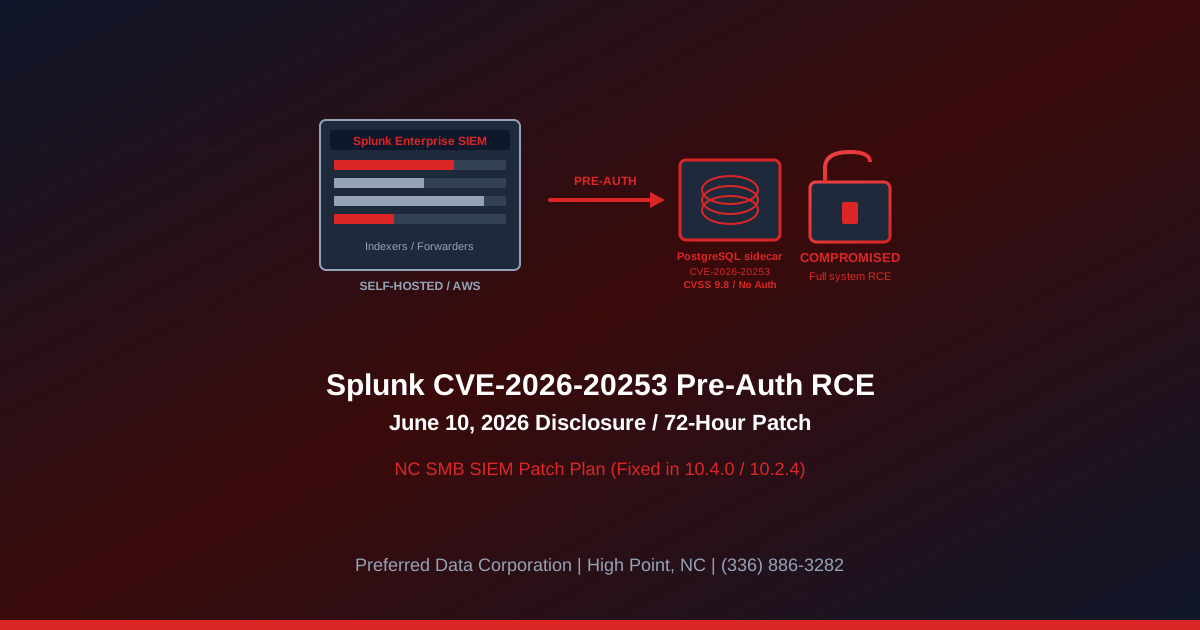
TL;DR: On June 10, 2026, Splunk disclosed four critical Splunk Enterprise vulnerabilities via SVD-2026-0610. The most critical is CVE-2026-20253 (CVSS 9.8), a missing-authentication flaw in a PostgreSQL sidecar service endpoint that lets unauthenticated attackers create or truncate arbitrary files for full system compromise. The service is active by default on Splunk Enterprise for AWS deployments. Three companion CVEs round out the bulletin: CVE-2026-20251 (CVSS 8.8) low-privilege RCE via Splunk Secure Gateway, CVE-2026-20252 (CVSS 7.6) SSRF in Dashboard Studio PDF export, and CVE-2026-20258 (CVSS 7.1) stored XSS in classic dashboards. Fixed versions: 10.4.0, 10.2.4, 10.0.7, 9.4.12, 9.3.13, or higher. NC small businesses running Splunk Enterprise need to patch this week.
Key takeaway: When the SIEM itself becomes the initial-access vector, every other security control downstream gets bypassed silently. A pre-auth RCE on a log-aggregation server is the exact pivot an attacker wants - it sits on the management network, it holds credentials for every monitored system, and it is the one box defenders trust by default. June 10, 2026 is a 72-hour patch event for any NC SMB with internet-reachable Splunk Enterprise.
Need your Splunk Enterprise patched and isolated by Friday? Preferred Data Corporation has run managed IT and cybersecurity for NC small businesses since 1987. Call (336) 886-3282 or request a SIEM posture review.
What did Splunk disclose on June 10, 2026?
On June 10, 2026, Splunk published advisory SVD-2026-0610 covering four distinct vulnerabilities in Splunk Enterprise, including a CVSS 9.8 critical pre-auth Remote Code Execution chain. Per SecurityWeek's coverage, the most severe issue, CVE-2026-20253, lives in a PostgreSQL sidecar service that ships active by default on Splunk Enterprise for AWS. Per Cybersecurity News, the disclosure includes a usable exploit chain that turns the missing-auth flaw into full system compromise without any prior credential.
Three facts an NC SMB owner should write down today:
- One pre-auth RCE, three companion bugs. CVE-2026-20253 (CVSS 9.8) is paired with CVE-2026-20251 (CVSS 8.8) RCE via Splunk Secure Gateway, CVE-2026-20252 (CVSS 7.6) SSRF in Dashboard Studio, and CVE-2026-20258 (CVSS 7.1) stored XSS in classic dashboards.
- Cloud-deployed instances are exposed by default. Per GBHackers' analysis, the vulnerable PostgreSQL sidecar service is active by default on Splunk Enterprise for AWS, so cloud deployments are exposed out of the box without operator opt-in.
- Fixed versions shipped same day. Per SVD-2026-0610, patched builds are 10.4.0, 10.2.4, 10.0.7, 9.4.12, 9.3.13, or higher. Any Splunk Enterprise instance below those builds is in scope.
For an NC manufacturer in High Point running compliance logging, a distributor in Greensboro centralizing firewall logs, or a professional services firm in Charlotte using Splunk for audit trails, this is a 72-hour calendar event.
Why is CVE-2026-20253 a 9.8 critical for cloud-deployed Splunk?
CVE-2026-20253 scores 9.8 because it requires no authentication, no user interaction, and runs over the network, then yields arbitrary file write on the host. Per SVD-2026-0610, the flaw is a missing-authentication check on an endpoint of a PostgreSQL sidecar service bundled with Splunk Enterprise. Per SecurityOnline's writeup, an unauthenticated remote attacker can create or truncate arbitrary files on the underlying host, which is the file-system primitive needed for full code execution and system compromise.
Quotable definition: CVE-2026-20253 is a missing-authentication vulnerability in a PostgreSQL sidecar endpoint shipped with Splunk Enterprise. Per Splunk advisory SVD-2026-0610 (June 10, 2026), the endpoint accepts unauthenticated requests that create or truncate arbitrary files on the host, producing a remote, pre-auth path to full system compromise on Splunk Enterprise instances at or below versions 10.3.x, 10.2.3, 10.0.6, 9.4.11, and 9.3.12.
The CVSS 9.8 score lines up with what NVD typically assigns: network attack vector, low complexity, no privileges required, no user interaction, with high impact to confidentiality, integrity, and availability. Per GBHackers, the practical exploit path is "internet-reachable Splunk Enterprise on AWS becomes root-level compromise in a single chain." For NC SMBs running Splunk Cloud Platform managed by Splunk, the vendor patches centrally; for NC SMBs running Splunk Enterprise self-hosted in AWS, the patch is the customer's responsibility.
Which NC small businesses run Splunk Enterprise and are exposed?
Three NC SMB segments are most exposed: defense-aligned manufacturers in the Piedmont Triad with CMMC logging requirements, regulated professional services firms in Charlotte and Raleigh that bought Splunk for audit retention, and IT-mature distributors in Greensboro and Winston-Salem that centralized firewall and endpoint logs in Splunk Enterprise. Splunk Enterprise is not a small-shop tool, but plenty of NC SMBs inherited it through acquisitions, MSP transitions, or compliance mandates and may not know which build they are on.
Practical NC SMB checklist for this week:
- Inventory: Where is Splunk Enterprise running? Self-hosted in AWS (highest exposure due to default-active PostgreSQL sidecar), self-hosted on-premises in High Point, Greensboro, or Charlotte, or Splunk Cloud Platform (managed by Splunk).
- Version: What build is it on? If below 10.4.0, 10.2.4, 10.0.7, 9.4.12, or 9.3.13, it is vulnerable.
- Network reach: Is the Splunk web UI or PostgreSQL sidecar port reachable from the internet? Internet-exposed instances are the highest priority. Per Cybersecurity News, the pre-auth chain does not need any prior foothold.
For an NC manufacturer with CMMC Level 2 obligations, the Splunk server holds the audit logs that prove your compliance posture. If the SIEM is the box the attacker takes over first, the evidence trail the auditor needs is gone with it.
How fast can attackers weaponize a pre-auth RCE in SIEM tooling?
History says weeks, not months. Per CISA's Known Exploited Vulnerabilities catalog, prior Splunk and SIEM-adjacent CVEs with public exploit chains have moved from disclosure to active exploitation in 2 to 6 weeks. Per SecurityWeek, the June 10, 2026 advisory includes enough technical detail that researchers have already published proof-of-concept exploit chains within 24 hours of disclosure.
| CVE | CVSS | Component | Auth Required | Fix Build |
|---|---|---|---|---|
| CVE-2026-20253 | 9.8 Critical | PostgreSQL sidecar (default-active on AWS) | None (pre-auth) | 10.4.0 / 10.2.4 / 10.0.7 / 9.4.12 / 9.3.13 |
| CVE-2026-20251 | 8.8 High | Splunk Secure Gateway (jsonpickle deserialization of KV Store data) | Low-privilege user | 10.4.0 / 10.2.4 / 10.0.7 / 9.4.12 / 9.3.13 |
| CVE-2026-20252 | 7.6 High | Dashboard Studio PDF export (SSRF) | Authenticated | 10.4.0 / 10.2.4 / 10.0.7 / 9.4.12 / 9.3.13 |
| CVE-2026-20258 | 7.1 High | Classic dashboards (stored XSS) | Authenticated | 10.4.0 / 10.2.4 / 10.0.7 / 9.4.12 / 9.3.13 |
The combination of pre-auth RCE plus low-privilege RCE via Splunk Secure Gateway is the dangerous part. An attacker with a single low-privilege Splunk account (think: contractor, vendor, intern who left two years ago) can chain CVE-2026-20251 via unsafe jsonpickle deserialization of App Key Value Store data into the same outcome the pre-auth chain delivers.
Need help confirming your Splunk build and exposure before the weekend? Call PDC at (336) 886-3282 or book a SIEM posture review.
What is the 72-hour patch plan for NC SMBs?
Run a 5-step plan inside the next 72 hours. June 10, 2026 is not a "patch on the next maintenance window" event for any internet-reachable Splunk Enterprise instance.
- Inventory every Splunk Enterprise instance (today). Self-hosted on-premises in High Point, Greensboro, Charlotte, or Raleigh, self-hosted in AWS, and any Splunk Cloud subscription. Record build numbers. Anything below 10.4.0, 10.2.4, 10.0.7, 9.4.12, or 9.3.13 is in scope.
- Block internet exposure of the Splunk web UI and PostgreSQL sidecar (today). Per SVD-2026-0610, CVE-2026-20253 is a network-reachable pre-auth chain. While you stage the patch, restrict ingress to the Splunk management interface to the management VLAN or a VPN-only allow list.
- Patch to the fixed build (within 72 hours). Per the advisory, upgrade to Splunk Enterprise 10.4.0, 10.2.4, 10.0.7, 9.4.12, 9.3.13, or higher. Take a snapshot first, plan a maintenance window, validate that indexing, search, and forwarder ingestion resume cleanly post-patch.
- Audit low-privilege Splunk accounts (this week). CVE-2026-20251 needs only a low-privilege user. Remove dormant accounts, rotate API tokens, and disable Splunk Secure Gateway if you do not use the Splunk mobile app or AR features.
- Validate Splunk Enterprise on AWS specifically (this week). Per GBHackers, the vulnerable PostgreSQL sidecar service is active by default on AWS deployments. Confirm the upgrade closed the sidecar exposure, and add network security group rules that deny the sidecar port from anywhere outside the trusted management subnet.
Key takeaway: Patching closes CVE-2026-20253. Network restriction in front of the patch protects you during the 72-hour window between disclosure and your maintenance gate. NC SMBs that survive this disclosure clean will be the ones who did both inside the same calendar week.
Why does this matter even if you don't run Splunk yourself?
Because the lesson generalizes to every SIEM, log aggregator, and monitoring stack an NC SMB runs. If your security team trusts the SIEM, you trust everything the SIEM touches: domain accounts, API tokens, firewall configurations, EDR alerts, and audit logs. Per SecurityOnline, the Splunk pre-auth chain is the latest example of management-plane software becoming the attacker's preferred initial-access vector. Elastic, Graylog, Wazuh, LogRhythm, and Microsoft Sentinel collectors face the same threat model: high-privilege boxes on the management network that customers patch on a slow cadence.
For NC SMBs, the practical takeaways are:
- SIEM tooling lives on the management VLAN, not the internet. Inbound access to web UIs and admin ports should be VPN-only or jump-host-only, never internet-facing.
- Apply KEV-style cadence to SIEM patches. When CISA KEV adds a CVE, the deadline is days, not weeks. Pre-auth RCEs on SIEMs deserve the same calendar treatment even before KEV listing.
- Backups for the SIEM matter too. If an attacker takes over the SIEM and deletes 30 days of logs to cover the breach, your incident-response narrative gets very short. Immutable log retention to a separate object store closes that gap.
NC manufacturers in the Piedmont Triad subject to CMMC, NC healthcare-adjacent firms in Charlotte subject to HIPAA, and NC defense suppliers subject to DFARS need the SIEM operating, patched, and tamper-evident. June 10, 2026 is a test.
How does Preferred Data Corporation help NC SMBs harden SIEM tooling?
PDC runs managed IT and cybersecurity for NC small businesses with patch SLAs, network segmentation, and 24/7 monitoring. We bring three things to the June 10, 2026 Splunk disclosure:
- Managed cybersecurity services: KEV-rate patching for SIEM infrastructure, identity hardening so a phished low-privilege user cannot chain CVE-2026-20251, vulnerability scanning that catches missed Splunk builds, and managed monitoring of the SIEM itself.
- Managed IT services: Splunk Enterprise upgrade to 10.4.0, 10.2.4, 10.0.7, 9.4.12, or 9.3.13, maintenance-window planning, post-patch validation of indexing and forwarder health, and documentation for CMMC and audit trails.
- Network and infrastructure services: Management-VLAN isolation of SIEM hosts, firewall rules that deny internet ingress to Splunk web UI and PostgreSQL sidecar ports, and segmentation reviews for AWS-hosted Splunk Enterprise.
For NC manufacturers in High Point and the Piedmont Triad, NC distributors in Greensboro and Winston-Salem, and NC professional services firms in Charlotte and Raleigh, the Splunk June 10, 2026 advisory is the kind of disclosure where the work this week decides whether the SIEM stays a control or becomes the breach.
Need help patching Splunk Enterprise and locking down the management VLAN by Friday? Call (336) 886-3282 or book a SIEM posture review.
Frequently Asked Questions
What is CVE-2026-20253 in Splunk Enterprise?
CVE-2026-20253 is a critical pre-auth Remote Code Execution vulnerability disclosed by Splunk on June 10, 2026, with a CVSS score of 9.8. Per Splunk advisory SVD-2026-0610, the flaw is a missing-authentication check on an endpoint of a PostgreSQL sidecar service bundled with Splunk Enterprise, allowing unauthenticated attackers to create or truncate arbitrary files on the host, leading to full system compromise.
What versions of Splunk Enterprise are vulnerable to CVE-2026-20253?
Splunk Enterprise versions at or below 10.3.x, 10.2.3, 10.0.6, 9.4.11, and 9.3.12 are vulnerable. Per SVD-2026-0610, the fixed builds are 10.4.0, 10.2.4, 10.0.7, 9.4.12, 9.3.13, or higher. NC SMBs running below those builds need to patch within 72 hours.
Are Splunk Enterprise on AWS deployments exposed by default?
Yes. Per SecurityWeek and GBHackers, the vulnerable PostgreSQL sidecar service is active by default on Splunk Enterprise for AWS deployments. NC SMBs running Splunk Enterprise self-hosted in AWS are exposed out of the box without any operator opt-in and should treat this as the highest-priority patch.
What is CVE-2026-20251 and why does it matter alongside the pre-auth bug?
CVE-2026-20251 is a CVSS 8.8 RCE in Splunk Secure Gateway, triggered by unsafe deserialization of App Key Value Store data via the jsonpickle Python library. Per SVD-2026-0610, a low-privileged user account is enough to trigger code execution, which means dormant Splunk accounts and forgotten contractor logins are also exposure paths even if the pre-auth chain is closed.
How does Splunk Cloud Platform fit into this disclosure?
Splunk Cloud Platform is managed by Splunk directly, so customers on the cloud-managed service receive vendor-applied patches centrally. Per SecurityOnline, the customer-owned exposure window applies to self-hosted Splunk Enterprise instances, including the default-active sidecar on AWS. NC SMBs on Splunk Cloud should still verify their service tier and patch status with Splunk Support.
Does NC manufacturer CMMC scope include the Splunk Enterprise server?
Yes. If Splunk Enterprise is the audit-logging and security-event aggregation tool for CUI workloads, the SIEM is in the CUI environment scope under CMMC Level 2 and NIST SP 800-171. NC defense manufacturers in the Piedmont Triad running unpatched Splunk Enterprise are exposed on both the patch-cadence controls and the audit-log integrity controls. Patch to 10.4.0, 10.2.4, 10.0.7, 9.4.12, or 9.3.13, restrict management-plane ingress, and document the immutable log retention tier.
Related Resources
- Managed Cybersecurity Services for NC Businesses - SIEM patching and management-plane hardening
- Managed IT Services for NC Businesses - Splunk Enterprise upgrade and validation
- Network and Infrastructure Services - Management-VLAN segmentation for NC SMBs
- Veeam CVE-2026-44963 Backup RCE Defense - Companion June 2026 critical disclosure
- Fortinet FortiSandbox CVE-2026-25089 Defense - Security-appliance RCE pattern
- Contact Preferred Data Corporation - Splunk posture review for NC SMBs