
Guide for business owners
Cyber Insurance for Small Businesses: What Insurers Ask and How to Qualify
Cyber insurance can pay for the investigation, the downtime and the legal work after an attack, but you have to qualify first, and an inaccurate answer on your application can put a claim at risk. This guide explains what a policy covers, the security controls insurers commonly ask about, why claims get disputed and how to get ready for renewal.
Last reviewed by Preferred Data Corporation
Who this guide is for
- Owners and office managers of 10 to 250 person companies buying cyber insurance for the first time or facing a renewal.
- Anyone filling out an application that asks about multi-factor authentication, backups or endpoint protection and is not sure how to answer.
- Leaders who want to know what a policy will and will not pay for before something goes wrong.
This guide does not recommend a carrier or a coverage amount. That is a conversation for your insurance agent or broker, who can see your whole risk picture.
What does cyber insurance cover, in plain words?
Cyber coverage comes in two kinds. First-party coverage pays your own costs after an attack, and third-party coverage protects you when someone else makes a claim against you (FTC). The FTC suggests asking your insurance agent whether you need one, the other or both.
| Coverage | Who it protects | Costs it typically includes |
|---|---|---|
| First-party | Your business | Legal advice on notice duties, recovering lost data, customer notification and call centers, lost income from business interruption, crisis management, cyber extortion and fraud, forensic investigation, and some fees, fines and penalties |
| Third-party | Your business when others make claims against it | Payments to affected consumers, settlement and lawsuit costs, defamation and copyright or trademark claims, costs of litigation and regulatory inquiries, and accounting costs |
The FTC also suggests checking that a policy covers data breaches, attacks on your network, attacks on your data held by vendors and other third parties, and attacks anywhere in the world, and asking whether the insurer will defend you in a lawsuit or regulatory investigation ("duty to defend" wording) and offers a breach hotline that is open every day at all hours (FTC).
Read the exclusions as carefully as the coverage. Fraud where an employee is tricked into sending money, for example, may need specific wording or a separate coverage part, so ask your agent how the policy handles it.
What security controls do cyber insurers ask about?
Applications commonly ask about a short list of security controls. Marsh, a large insurance broker, publishes a list of 12 key controls and says "the adoption of certain controls has now become a minimum requirement of insurers" (Marsh). Marsh also says insurers are "asking more questions than ever before" about an applicant's controls.
| Control (Marsh wording) | What it means for a small business |
|---|---|
| Multifactor authentication (MFA) for remote access and privileged or administrator access | A second check, like a phone prompt, on email, remote access and admin accounts |
| Email filtering and web security | Blocking dangerous emails, links and websites before people see them |
| Secured, encrypted, and tested backups | Backups criminals cannot reach, that you have actually restored from |
| Privileged access management (PAM) | Few admin accounts, kept separate from everyday logins and closely controlled |
| Endpoint detection and response (EDR) | Software on every computer that spots and stops attacker behavior, with someone watching the alerts |
| Patch and vulnerability management | Installing security updates quickly, starting with internet-facing equipment |
| Incident response plans | A written plan for who does what, and who calls whom, on a bad day |
| Cybersecurity awareness training and phishing testing | Regular short lessons and practice emails so staff spot scams |
| Remote desktop protocol (RDP) mitigation and other hardening techniques | No remote desktop open to the internet, and secure settings on every system |
| Logging and monitoring | Keeping records of logins and system activity, and reviewing them |
| Replacement or protection of end-of-life (EOL) systems | Retiring or walling off computers and software that no longer get security updates |
| Digital supply chain cyber risk management | Checking the security of vendors and software providers that connect to you |
Some controls matter more than others. In April 2023 research that paired insurance claims with security questionnaires, Marsh McLennan found that automated hardening (applying secure baseline settings to servers and operating systems) had the strongest link to fewer incidents: organizations using it were nearly six times less likely to have one. The same release says the three controls insurers had recommended most often were EDR, MFA and privileged access management, and that patching high-severity flaws within seven days was in place at only 24 percent of the organizations studied (Marsh McLennan).
Requirements vary by insurer and by the size of the policy, so treat any list as a starting point and confirm the details with your agent or broker. Our free cyber insurance readiness checker walks through the controls commonly asked about and gives you a fix list in priority order.
Key takeaway: If an application asks about a control, assume the insurer will want proof that it is in place, not just a yes.
Why do cyber insurance claims get disputed?
One avoidable reason is an application answer that was not true. In North Carolina, statements in an insurance application are treated as representations, and the law says a representation "unless material or fraudulent, will not prevent a recovery on the policy" (N.C. Gen. Stat. 58-3-10). In plain words, an inaccurate answer about something that matters to the insurer can put a claim at risk. Saying "yes, we use multi-factor authentication everywhere" when it covers email but not remote access is exactly the kind of answer that causes trouble later.
How a policy responds depends on its wording and on the facts, so have your agent or attorney walk you through the conditions before you need them. This guide is not legal advice.
Keep records of response costs and staff time as the incident happens, not afterward from memory. The free incident report form includes a cost and time tracker for exactly that, alongside the incident log.
- Answering for the company you plan to be, not the company you are today. If a control is half done, say so and explain the plan.
- Letting a control lapse after the policy starts, such as switching off multi-factor authentication for one executive or letting backups stop running.
- Missing the policy's own conditions, such as how quickly you must report an incident or which response firms you must use.
- Assuming the policy covers something it excludes. Read the exclusions and the definitions, not just the coverage summary.
Key takeaway: An honest "partly" on an application is far safer than a hopeful "yes".
How should we prepare for a cyber insurance renewal?
Start a few months before the renewal date, not the week it is due. Pull last year's application, check every answer against what is true today, fix the biggest gaps first, and gather simple proof such as screenshots and reports for each control.
| Control | Simple proof to keep on file |
|---|---|
| Multi-factor authentication | A report or screenshot showing MFA required for email, remote access and every admin account |
| Backups | Backup job reports, proof that one copy is offline or immutable, and the date and result of your last test restore |
| Endpoint detection and response | The list of protected computers and servers, and who watches the alerts after hours |
| Patching | A recent patch report, with internet-facing devices shown first |
| Training and phishing tests | Attendance records and the dates of recent training and practice emails |
| Incident response plan | A written plan with current phone numbers, including your insurer's claims or breach hotline |
Free templates can close paperwork gaps quickly: an incident response plan template, a tabletop exercise template whose after-action report gives you a dated record that the plan was rehearsed, a data backup and recovery policy, a wire transfer and payment verification policy and a written information security program. Our email security checker shows whether your domain has basic email protections set up, and the cybersecurity assessment gives a broader score.
How does cyber insurance work with ransomware and payment fraud?
Ransomware and payment fraud drive many claims. Coalition, a cyber insurer, reports that ransomware was its most costly claim type in 2025, with an average loss of $269,000, while business email compromise and funds transfer fraud made up 58 percent of the cyber incidents it saw (Coalition 2026 Cyber Claims Report). Coalition also says 70 percent of its ransomware claims involved criminals both locking systems and stealing data.
Speed matters with payment fraud. Coalition says the sooner a policyholder reports suspicious activity, the more likely it is to recover some or all of the stolen money (Coalition). A written wire transfer verification policy, with a call back to a known number before any new or changed bank details, stops many of these losses before they start.
If an attacker demands a ransom, your insurer will usually be part of the decision, but the law still applies. The Treasury Department's sanctions office warns that companies helping victims pay, including cyber insurance firms, may risk violating sanctions rules, and that the U.S. government strongly discourages paying (OFAC advisory). Our ransomware guide covers prevention, the first 24 hours and the payment question in more detail.
If personal information is stolen, North Carolina law may require you to notify the people affected and the Attorney General. See our guide to North Carolina data breach law.
Where to start
5 practical next steps, in order.
Check where you stand today
Run the free cyber insurance readiness checker. It takes a few minutes and lists your gaps in priority order.
Find your current policy and last application
Read what you told the insurer last year and mark every answer that is no longer true, or never fully was.
Close the biggest gaps first
Multi-factor authentication on email, remote access and admin accounts, and backups you have actually restored from, are a sensible place to start. Our cybersecurity services and backup service cover both.
Put the insurer in your incident plan
Add the claims or breach hotline to your printed incident response plan (the free incident response plan template has a contact roster for it), and note how quickly the policy says you must report an incident.
Meet your broker before the renewal rush
Bring your proof for each control, ask what has changed in the application, and ask how the policy handles payment fraud and ransomware.
Free tools and templates
Free tools, policy templates and checklists from our resource library that help you qualify for cyber insurance and answer the application honestly.
Free tools
 Free toolCyber Insurance Readiness CheckerSixteen quick questions about the security controls insurers commonly ask about, with a readiness score and a fix list in priority order.
 Free toolCybersecurity AssessmentEighteen yes, partly or no questions on logins, computers, data and people, with a letter grade and the actions to take first.
Policy templates
 Policy templateInformation Security PolicyEstablish the core security program every insurer, auditor and customer now asks about: data classification, access control, patching, encryption, logging and vendor risk.
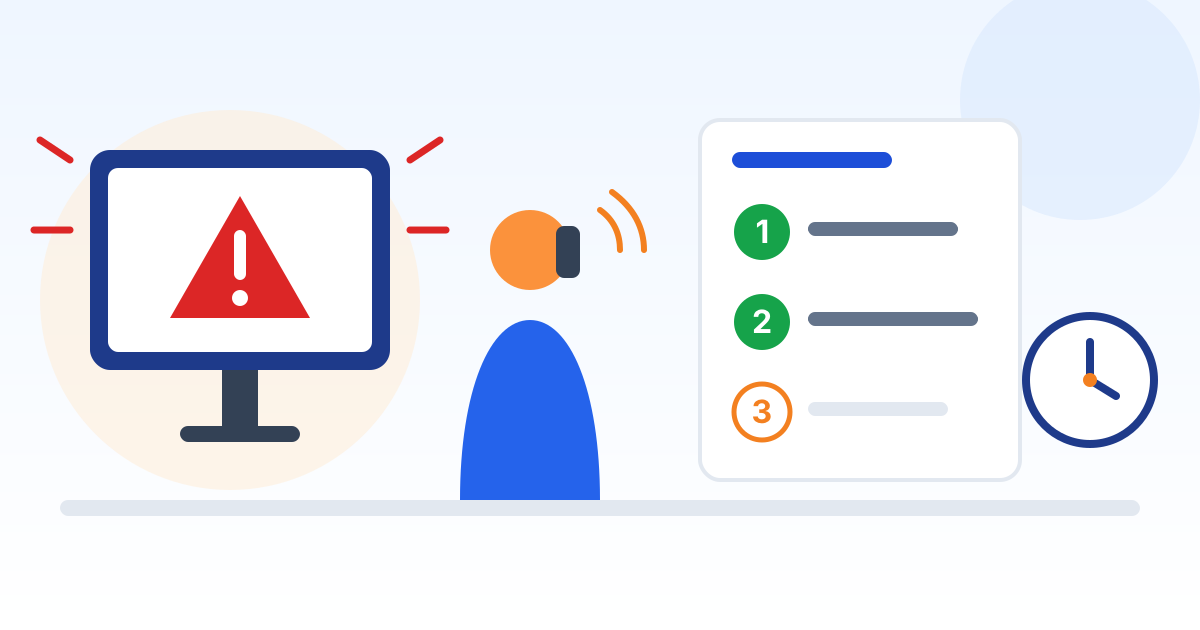 Policy templateIncident Response PlanKnow exactly who does what in the first hours of a ransomware attack, data breach or business email compromise, including who to call and which notification clocks start.
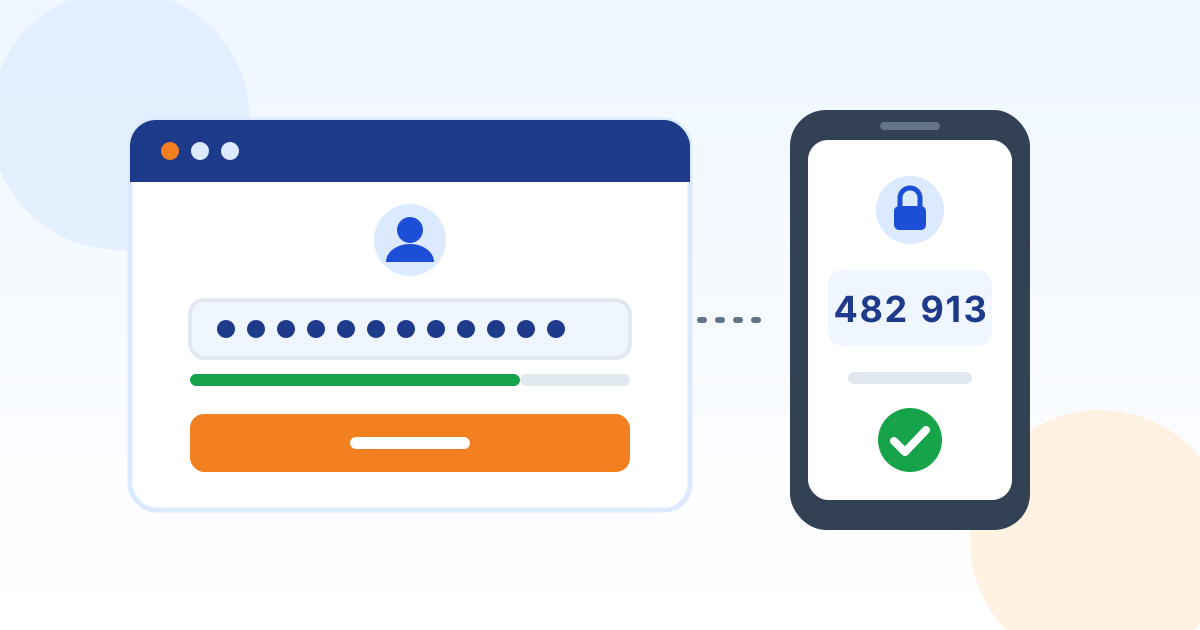 Policy templatePassword and MFA PolicyModern password and MFA rules based on current NIST SP 800-63B guidance: long passphrases, a password manager, no forced resets, and phishing-resistant MFA where it matters.
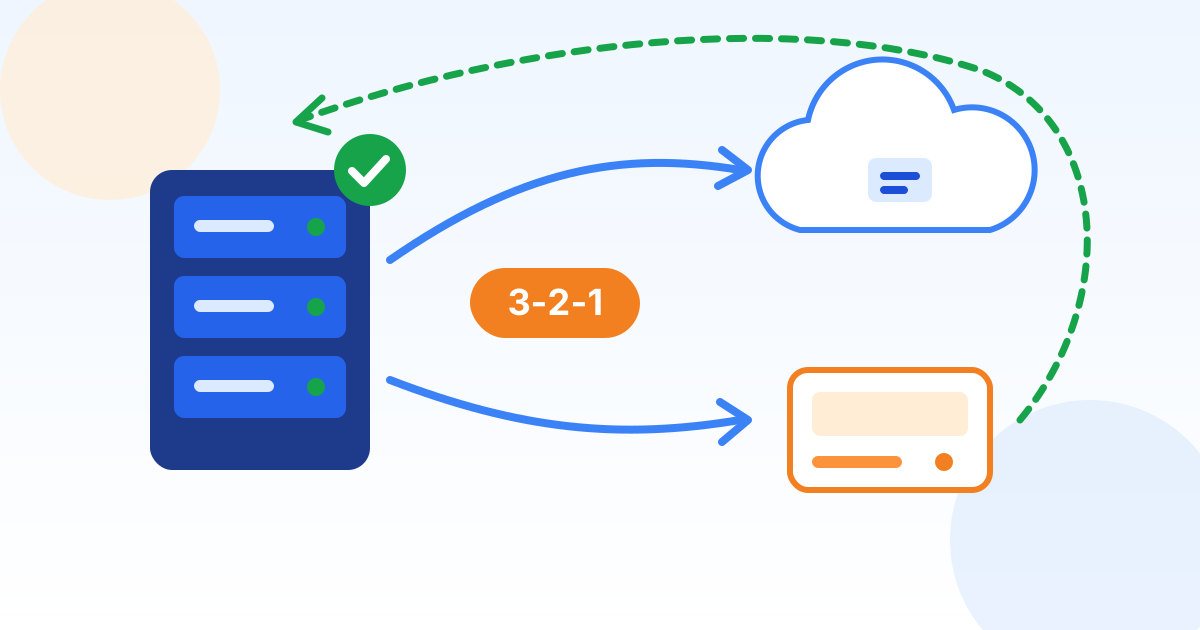 Policy templateData Backup and Recovery PolicyDefine what gets backed up, how often, where copies live and how fast you must recover, using the 3-2-1-1-0 rule that ransomware now demands.
 Policy templateWISP (FTC Safeguards Rule)A written information security program built for the FTC Safeguards Rule, for tax preparers, CPA firms, mortgage brokers, auto dealers that finance and other businesses the law treats as financial institutions.
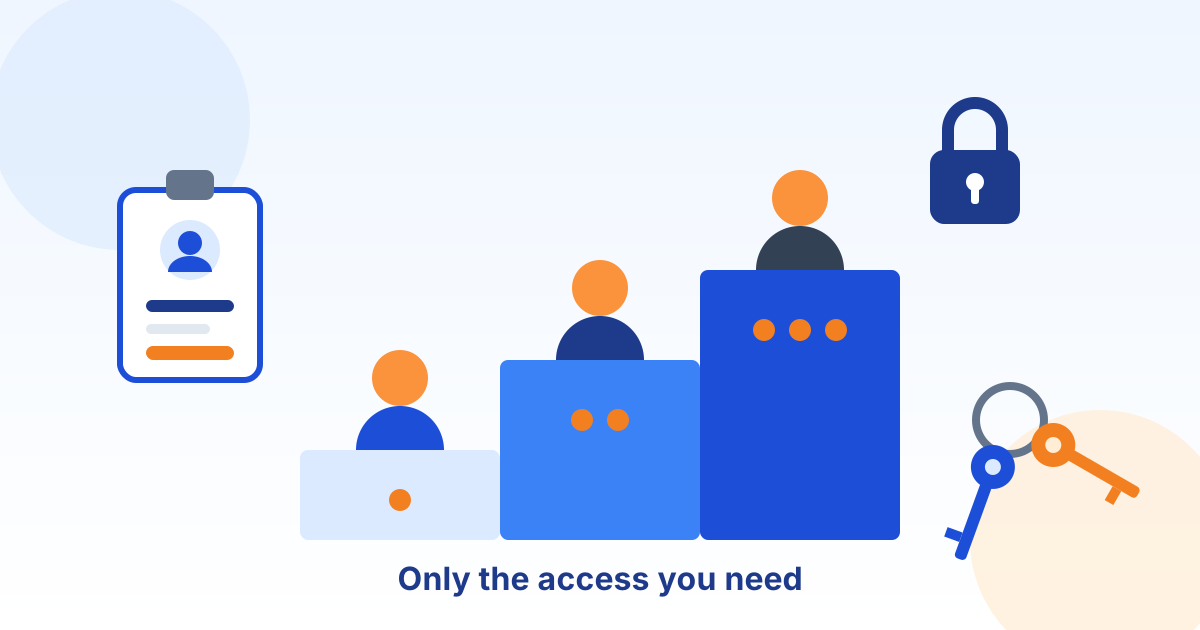 Policy templateAccess Control PolicyGive people only the access they need, protect every sign-in with MFA, keep admin accounts separate, review access every quarter and remove it the moment someone leaves.
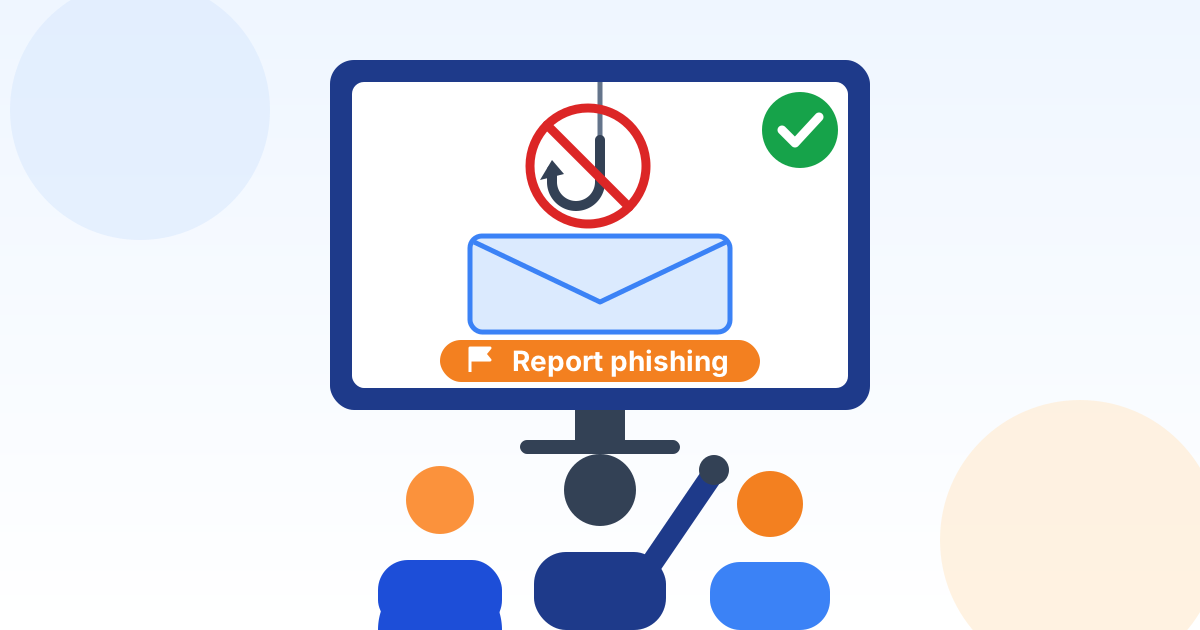 Policy templateSecurity Awareness Training PolicyDecide who gets cybersecurity training, when, how phishing tests work, and which training records you keep for insurers and customer questionnaires.
 Policy templateIncident Response PlaybooksStep-by-step playbooks for email account takeover, vendor or IT provider compromise, insider data theft, malware, misdirected data and website attacks, built to work with your incident response plan.
 Policy templateBreach Notification ProcedureDecide with your breach counsel whether an incident legally requires notice, then notify the right people with the right content: North Carolina rules by default, with HIPAA, FTC, DFARS and multistate steps when they apply.
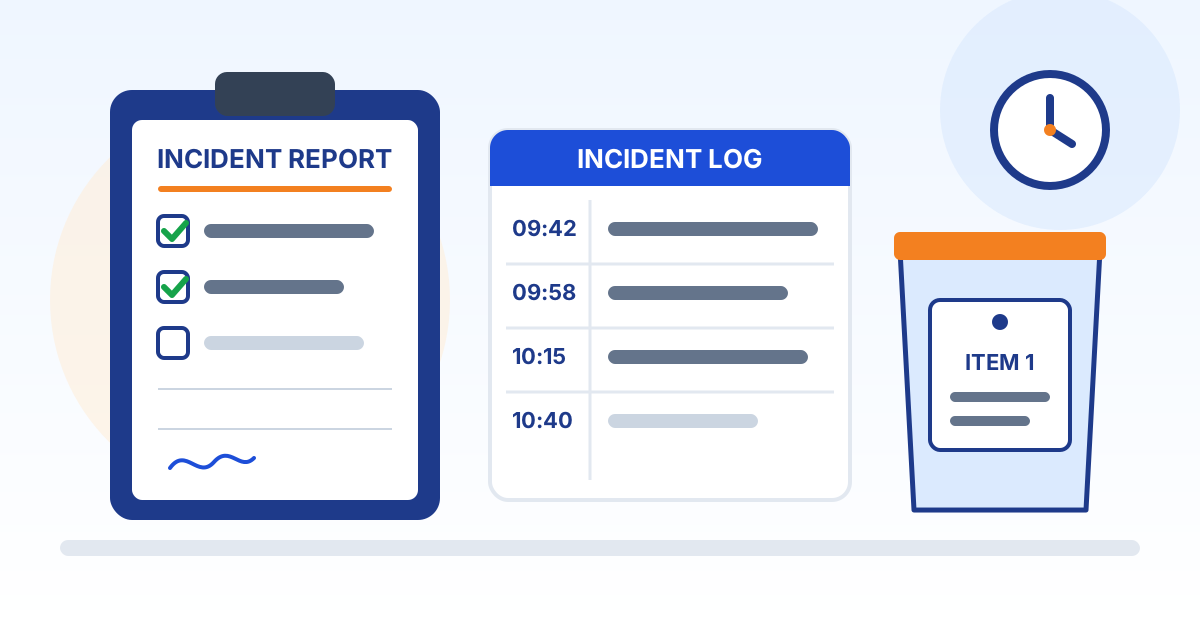 Policy templateIncident Report FormThe forms to fill in during a cyber incident: an initial report, triage sheet, timestamped log, evidence and chain of custody register, decision log, notification tracker, cost tracker and closure summary.
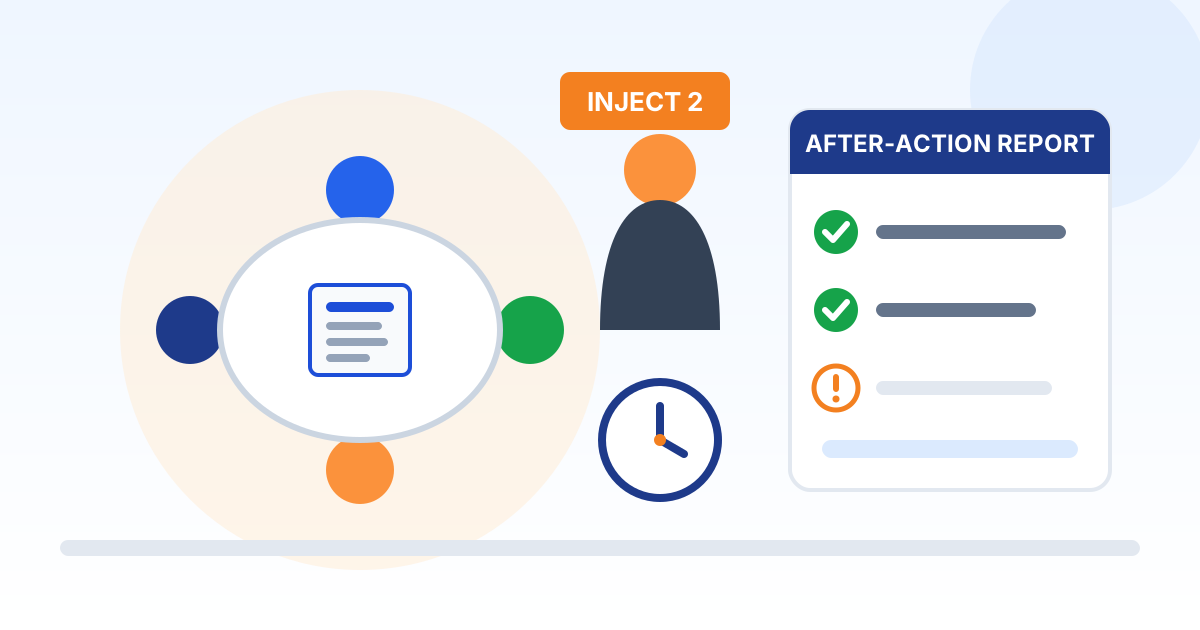 Policy templateTabletop Exercise PlanRehearse your incident response plan in a two-hour guided discussion: ready-made ransomware, wire fraud and account takeover scenarios with timed injects, a scoring sheet and an after-action report.
Checklists
Reference

Reading list
The articles from our blog that go deeper on this topic, picked and grouped so you can read them in order.
Qualifying and renewing
The controls insurers ask about
- MFA in the AI Age: Beyond Passwords for NC Businesses
- EDR vs MDR: AI-Ready Protection for NC Small Business
- Immutable Backups: Ransomware-Proof Data Protection for NC Businesses
- Why NC Businesses Must Test Their Backups (And How to Do It Right)
- Security Awareness Training for Employees: A Guide for NC Businesses
- Windows 10 End of Life: Why NC Businesses Must Upgrade Now
- How to Write an Incident Response Plan: NC Business Guide
Frequently asked questions
What is the difference between first-party and third-party cyber coverage?
First-party coverage pays your own costs after an attack, such as forensic investigation, data recovery, customer notification and lost income. Third-party coverage protects you when others bring claims against you, such as customers or regulators (FTC). The FTC suggests asking your agent whether you need one, the other or both.
Do we need multi-factor authentication to get cyber insurance?
Expect it to come up. MFA for remote access and admin accounts is the first control on Marsh's list of 12, and Marsh says some controls are now a minimum requirement of insurers (Marsh). Requirements vary by insurer, so check your application and ask your broker.
Can an insurer refuse to pay because of a wrong answer on the application?
It can try. Under North Carolina law, an inaccurate application statement that is material, or a fraudulent one, can prevent recovery on the policy (N.C. Gen. Stat. 58-3-10). Answer every question for the business as it is today, and talk to your attorney if a dispute comes up.
Does cyber insurance pay the ransom?
Some policies include cyber extortion coverage (FTC), but any payment has to be lawful, and paying a group under U.S. sanctions can violate federal law (OFAC advisory). Read your policy, and make the decision with your insurer, your attorney and law enforcement.
Does cyber insurance cover wire fraud and fake invoices?
It depends on the policy wording. Business email compromise and funds transfer fraud made up 58 percent of the cyber incidents Coalition saw in 2025 (Coalition), so ask your agent exactly how your policy handles money sent because of a fake email or call.
How long does it take to get ready for a cyber insurance application?
It depends on your gaps. If the controls are already in place, the work is mostly checking your answers and gathering proof. If they are missing, putting them in comes first, so start well before the renewal date. Our free readiness checker shows which situation you are in.
How can Preferred Data help with cyber insurance?
We are not an insurance agency and do not sell policies. We help businesses put the controls insurers ask about in place and keep the proof on file, through our cybersecurity, backup and managed IT services. Call (336) 886-3282 to talk it through.
Sources
- FTC: Cyber insurance (small business guidance)
- Marsh: Cyber resilience, 12 key controls to strengthen your security
- Marsh McLennan: research linking key cybersecurity controls and reduced cyber risk (April 6, 2023)
- Coalition: 2026 Cyber Claims Report announcement (March 5, 2026)
- U.S. Treasury OFAC: Updated Advisory on Potential Sanctions Risks for Facilitating Ransomware Payments (September 21, 2021, PDF)
- N.C. Gen. Stat. 58-3-10, Statements in application not warranties
How Preferred Data can help
Want to walk into your renewal with proof in hand?
We will review the controls your insurer asks about, help close the gaps and help you gather simple evidence for each one, in plain English.
Preferred Data Corporation, in business since 1987 and headquartered in High Point, NC. 1208 Eastchester Drive, Suite 131, High Point, NC 27265